
Egyptian Travel Insights — Field Guide No. 02
Essential Packing List
Preparation for a journey into this unique climate requires a balance between protection from the elements and the constraints of mobility. This guide helps every traveller into Egypt select items that serve multiple purposes — for urban centres and desert outskirts alike.
Eight field chapters — clothing, terrain, sun, hydration
Field Orientation
What this guide covers
The intense sun, variable evening temperatures, and the need for cultural modesty all dictate the contents of a well-organized bag. Rather than listing every possible item, our egypt travelling guides focus on objects that solve real problems — heat exhaustion, sunburn, dust, and the gap between daytime heat and nighttime cool.
Each chapter below explains what to bring, why it matters in this specific climate, and how it performs across the settings you are likely to encounter — from paved city streets to uneven stone paths and open desert ground.
Quick Reference
- 01 Linen and light cotton for breathability and coverage
- 02 Broken-in walking shoes with ventilation
- 03 Wide-brimmed hat, sunglasses, and sun-blocker
- 04 Reusable water container and basic first-aid kit
- 05 Lightweight jacket or pashmina for evening cool
- 06 Two-pin European adapter and portable power bank
The Field Ledger
Eight chapters of practical preparation
Clothing for Heat and Modesty
The primary consideration for clothing is breathability combined with coverage. Natural fibers such as linen and light cotton allow airflow while protecting the skin from direct ultraviolet exposure. In many areas, keeping shoulders and knees covered is socially appropriate — which also serves the practical purpose of preventing sunburn. Loose-fitting garments outperform tight synthetics in this environment, as they facilitate the body's natural cooling during peak heat. Prioritize pieces that move air across the skin rather than trapping it, and select colors that do not show dust heavily after a day of walking.
Footwear for Diverse Terrain
The ground underfoot varies from smooth pavement to loose sand and uneven stone paths. A sturdy pair of walking shoes with good ventilation is the most versatile choice for daily exploration. For more relaxed environments, sandals with secure straps are useful — though they offer less protection against heat radiated from the ground. Avoid brand-new footwear; bring items already broken in to prevent discomfort during long walks through historical districts. A second pair of lightweight sandals gives your feet a break in the evenings and doubles as shower wear when facilities are shared.
Skin Protection and Sun Awareness
The sun in this part of the world is exceptionally strong, even on days when a breeze makes the air feel cooler. A wide-brimmed hat shields the face and neck, while high-quality sunglasses protect the eyes from glare reflecting off sand and water. Carry a reliable sun-blocker and apply it frequently throughout the day — every two hours, and after any heavy perspiration. Lip balm and moisturizing lotions help combat the drying effects of arid desert air, which can crack skin faster than the heat itself. A small tube of aloe gel in your day bag offers immediate relief if you miss a spot.
Hydration and Health Utility
Maintaining hydration is a constant task in the heat, and a reusable water container is the practical way to manage it. While water is available locally, having your own supply ensures you are never caught without it during transit or a long walk. A small personal kit with adhesive bandages, rehydration salts, and any daily medications provides quick self-care when navigating remote regions. Include a few blister plasters and a mild pain reliever — minor ailments can escalate quickly when you are walking for hours in dry heat. These additions add negligible weight but significant peace of mind.
Field Note
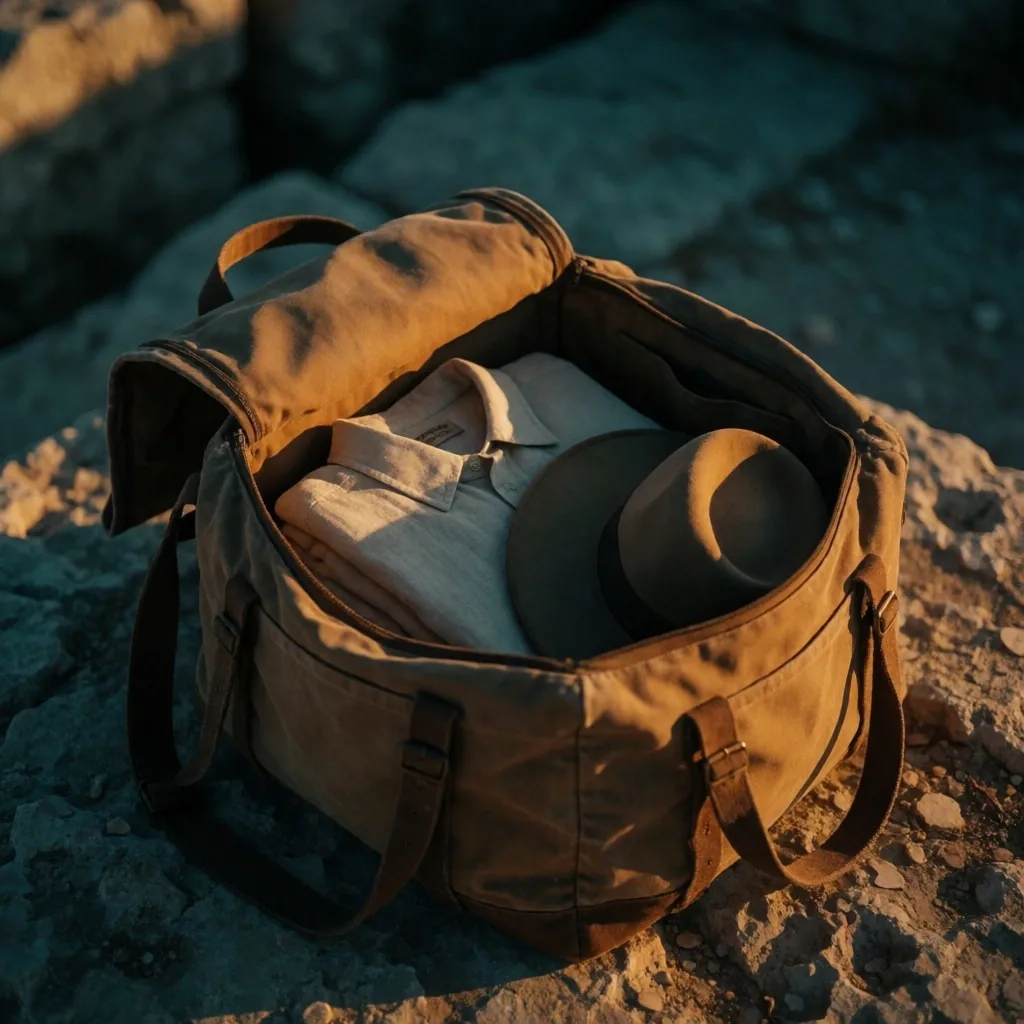
The gap between midday heat and evening cool is where most travellers get caught unprepared.
Evening Layers and Temperature Shifts
It is a common misconception that the region remains hot at all hours. Once the sun sets — especially in the desert or near the river — the temperature can drop significantly and quite rapidly. A lightweight jacket or a pashmina-style wrap provides warmth in the evening and doubles as an extra layer of sun protection during the day. This duality makes such items a staple in the kits of experienced travellers who understand the volatility of the local atmosphere. Choose a layer that compresses into a small pocket of your bag without adding noticeable weight.
Electronics and Power Management
Keeping your devices charged is important for navigation and communication. The local power grid uses the two-pin European-style plug, so an appropriate adapter is a necessary inclusion. Given the heat, keep electronics shielded from direct sunlight to prevent overheating — a phone left on a sunny stone surface can shut down within minutes. A portable power bank is useful during long days where access to a fixed outlet is limited, especially when exploring the expanses between major hubs. A short cable reduces tangle in your bag and charges faster through a power bank than a long coiled one.
Document Organization and Security
Keeping essential paperwork organized and secure is foundational travel guides advice. A waterproof pouch or a dedicated internal pocket in your bag protects identification and any necessary permits from sweat, dust, or accidental spills. Keep digital copies of these documents stored in a secure cloud location, and carry a printed backup separate from the originals. Being organized in this manner reduces stress and allows you to focus on the landscape rather than the logistics of recovery. A lanyard with a slim card sleeve keeps your most-needed document accessible without rummaging through your bag at every checkpoint.
Versatile Accessories for Daily Use
Small items often make the biggest difference in daily comfort. A cooling neck towel, a small handheld fan, or a simple umbrella for portable shade can significantly mitigate the impact of midday sun. Carrying a small bag for waste ensures you can adhere to environmental standards even when public bins are not immediately available. These thoughtful additions demonstrate a level of preparation that distinguishes a seasoned traveller into Egypt from a first-time visitor — each weighs almost nothing, yet each solves a problem that would otherwise cut a day of exploration short.
Adaptation Matrix
What shifts between settings
The same bag serves different priorities depending on where your day takes you. This matrix shows which items move from optional to essential as the environment changes.
Urban Centres
- — Modest coverage matters most
- — Broken-in walking shoes for long streets
- — Sun-blocker reapplied every two hours
- — Power bank for navigation apps
- — Documents in a secure internal pocket
Desert Outskirts
- — Full-coverage loose linen layers
- — Sturdy shoes — sand radiates heat
- — Extra water supply is non-negotiable
- — Wide-brimmed hat and sunglasses
- — First-aid kit with rehydration salts
Evening and Night
- — Lightweight jacket or pashmina wrap
- — Temperature drops faster than expected
- — Sunglasses still useful for glare
- — Moisturizer for dry night air
- — Charged devices for low-light navigation
Common Questions
Packing questions answered
Short answers to the details that most first-time travellers into Egypt ask before they start filling their bag.
How much should the full bag weigh? +
Aim for a base weight that you can carry comfortably for an hour of walking. Linen and cotton garments are light, and a single power bank adds minimal weight. The heaviest items are typically the water container and the walking shoes — distribute them close to your back if using a backpack.
Are there items I should leave behind? +
Heavy synthetic fabrics, brand-new shoes, and single-use plastic bottles add weight and discomfort without benefit. Tight clothing restricts airflow and draws more attention than is practical. Leave behind any electronics that cannot tolerate sustained heat — extreme midday temperatures can damage sensitive components left in a bag in direct sun.
Can I find these items locally if I forget something? +
Many everyday items are available locally, but relying on that means spending exploration time on logistics. Bring your core kit — shoes, hat, sun-blocker, adapter, and documents — from home. If you forget a minor accessory like a cooling towel or a small fan, those are easier to replace on arrival than the essentials.
How do I manage documents safely? +
Use a waterproof pouch for originals, keep printed copies in a separate compartment, and store digital copies in a secure cloud location you can access from any device. A lanyard with a slim card sleeve keeps your most-referenced document at hand without exposing everything each time you need it.
Continue Reading
Where to go next
Once your bag is organized, the next step is understanding how to carry yourself in the local environment. These companion guides cover safety practices, social etiquette, and the regional differences that shape what to expect on the ground.
Need Clarification?
If a specific item on this list raises questions about your itinerary, reach out and we will help you think it through.
- Phone +201030303793
- Email [email protected]
- Hours Mon–Fri, 09:00–18:00
Egyptian Travel Insights — Informational Field Guides
Return to Homepage